Maintenance tracking and owner statements for charter fleets What the week
left behind.

The boat comes back with a mark on the hull, a winch that sticks and a battery that did not hold. Somebody has to fix it, somebody has to pay for it, and the owner wants to know what happened. That is one chain, and it usually runs on memory.

For the technical manager, and the owners behind the fleet

Maintenance

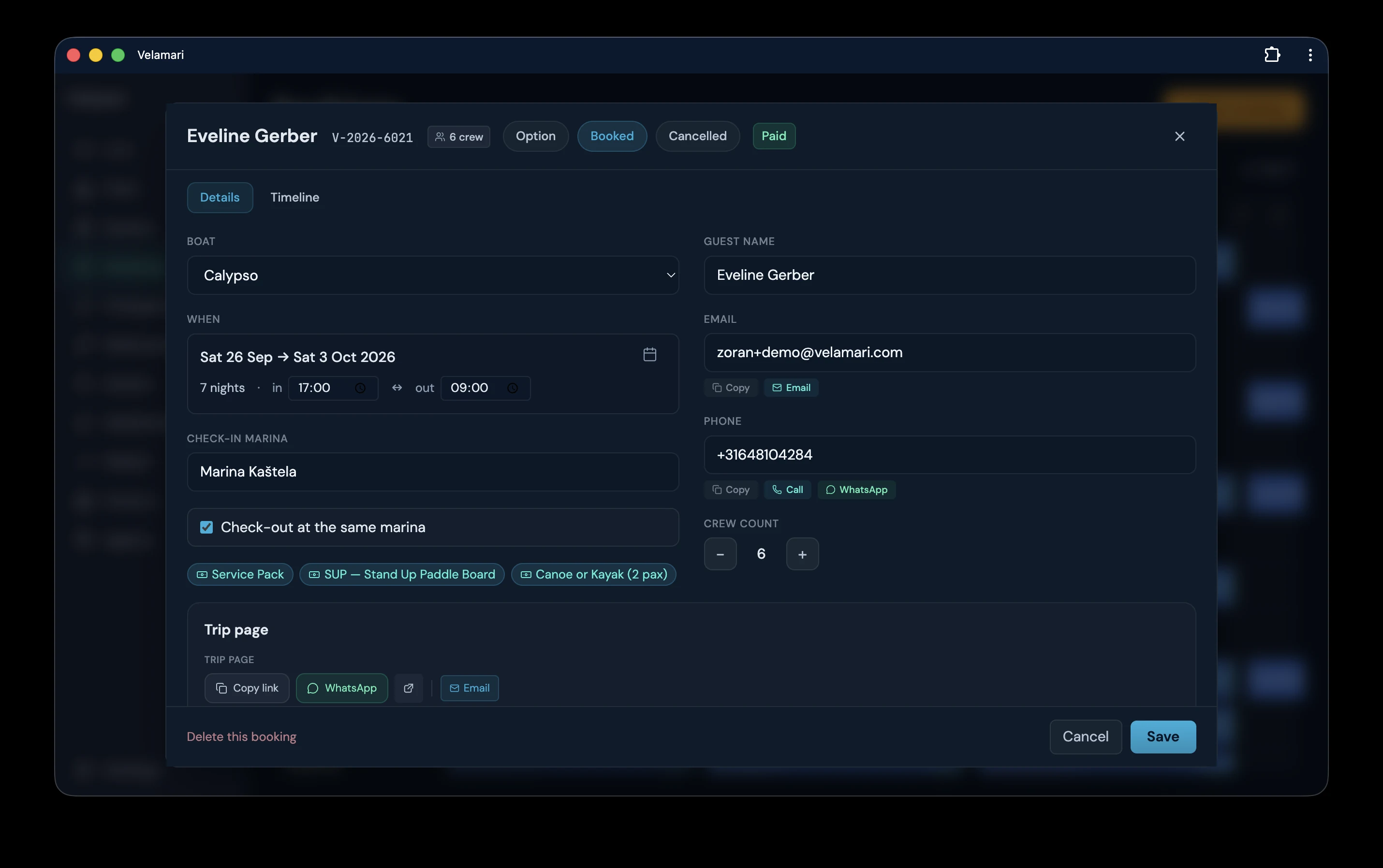
Raised from the dock, in the time it takes to notice it

Whoever finds it photographs it and says what is wrong into their phone. The description writes itself from the recording. It goes to the right person, cleaner or technician, with the boat, the charter and the photos on it.

Replaces A note on a phone that becomes a message that becomes an argument in October.
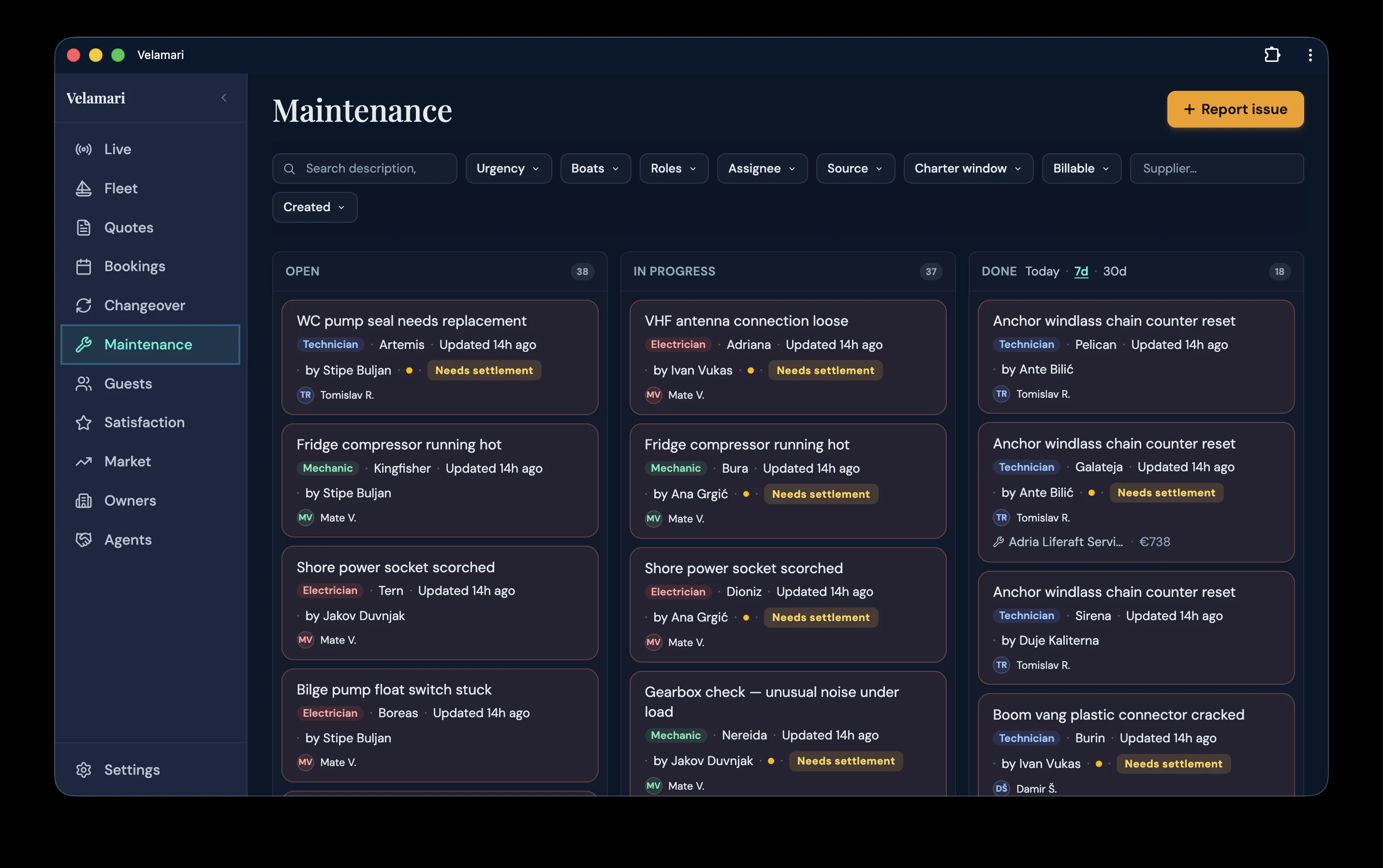
Maintenance: Raised from the dock, in the time it takes to notice it

The dock team's day

A work list, not a group chat

Cleaners, technicians and inspectors sign in with a PIN and see their own jobs. No email address, no password to forget. They log time, add photos as they go, and close the job on the boat rather than back at the office.

Replaces Asking three people what still needs doing before Saturday.

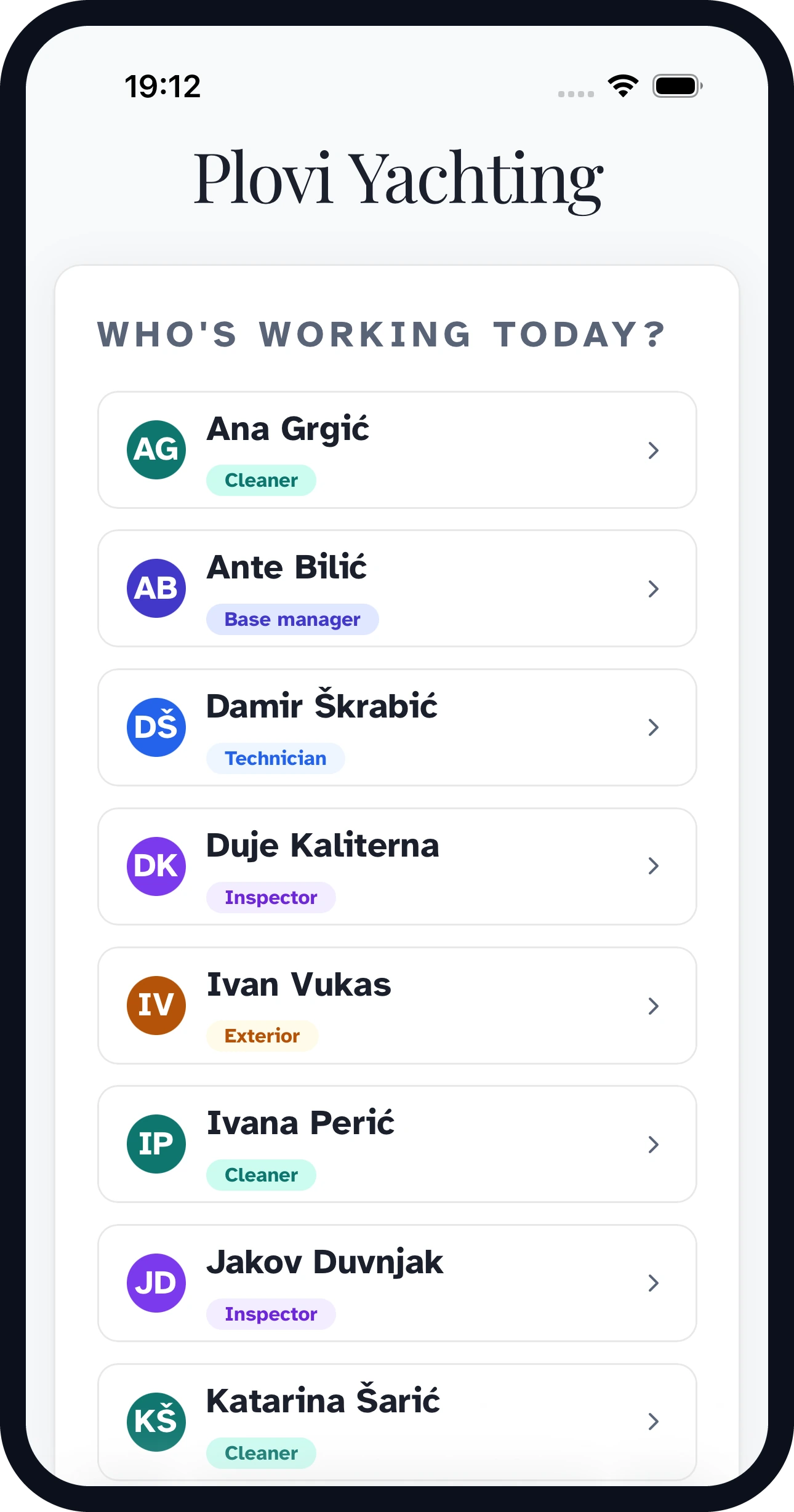
The dock team's day: Who is working today.
Who is working today.
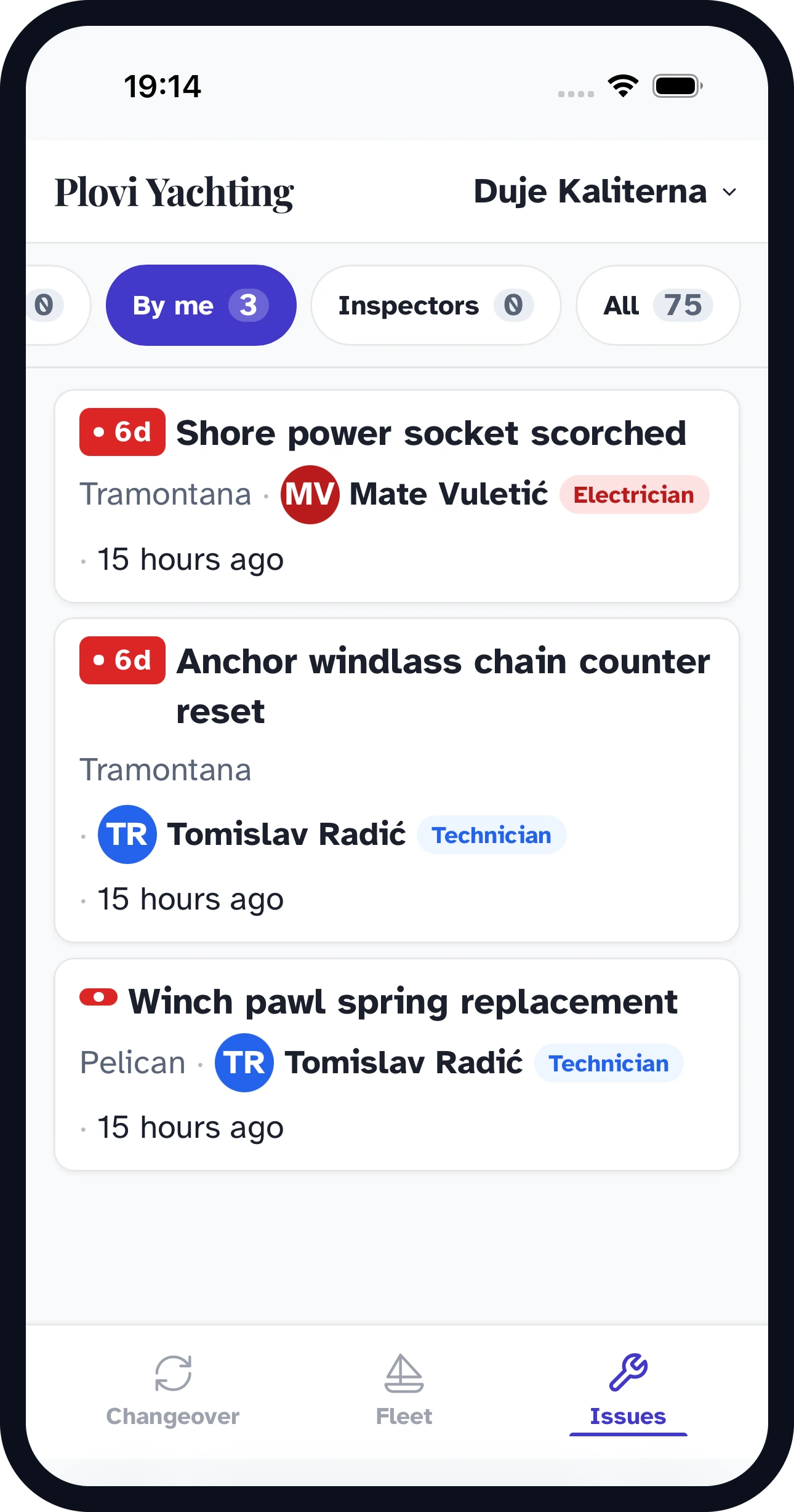
The dock team's day: Open faults, fleet-wide.
Open faults, fleet-wide.
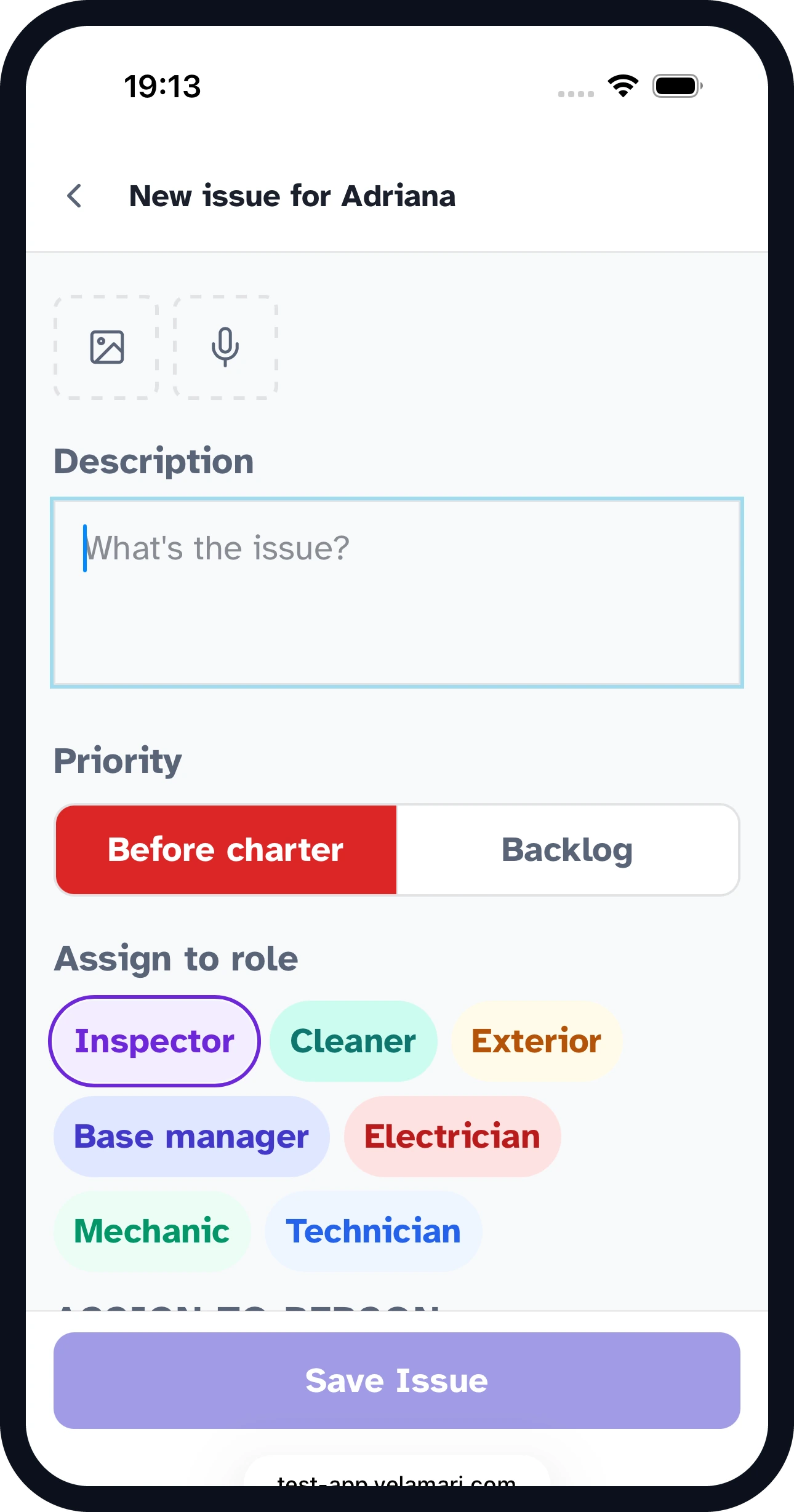
The dock team's day: Raised from the dock.
Raised from the dock.
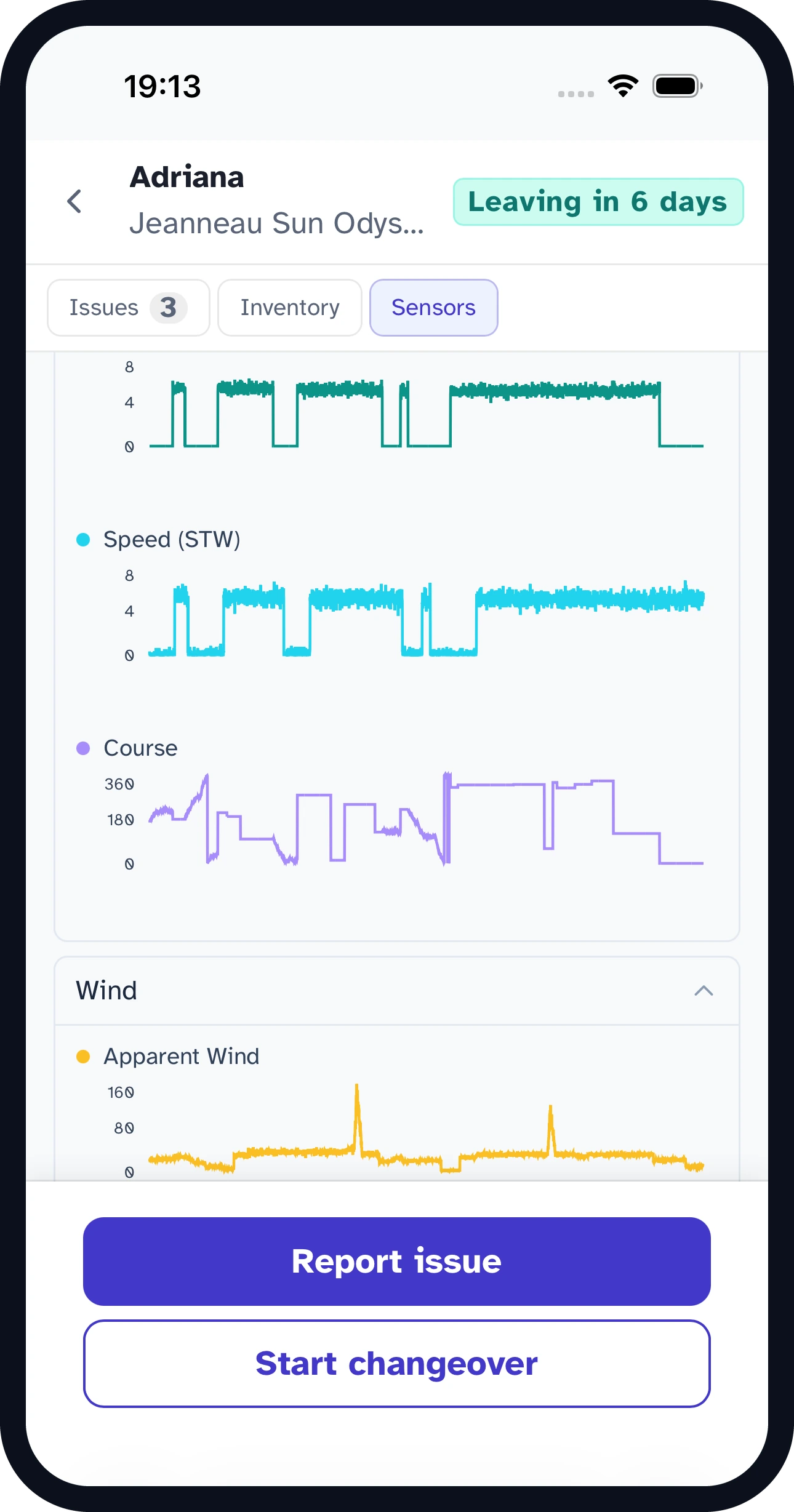
The dock team's day: The boat's own readings.
The boat's own readings.

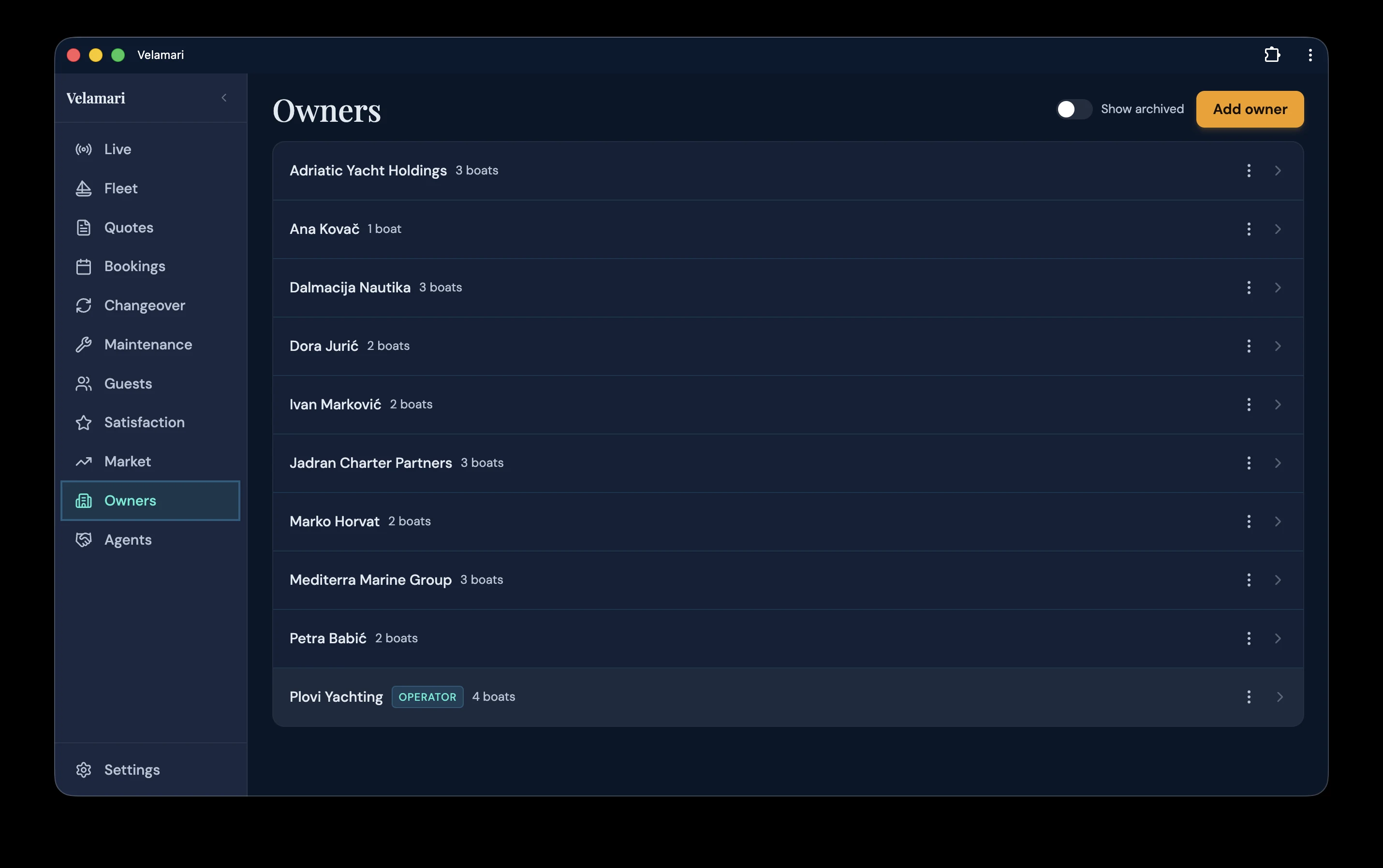
Owners

The reckoning takes minutes

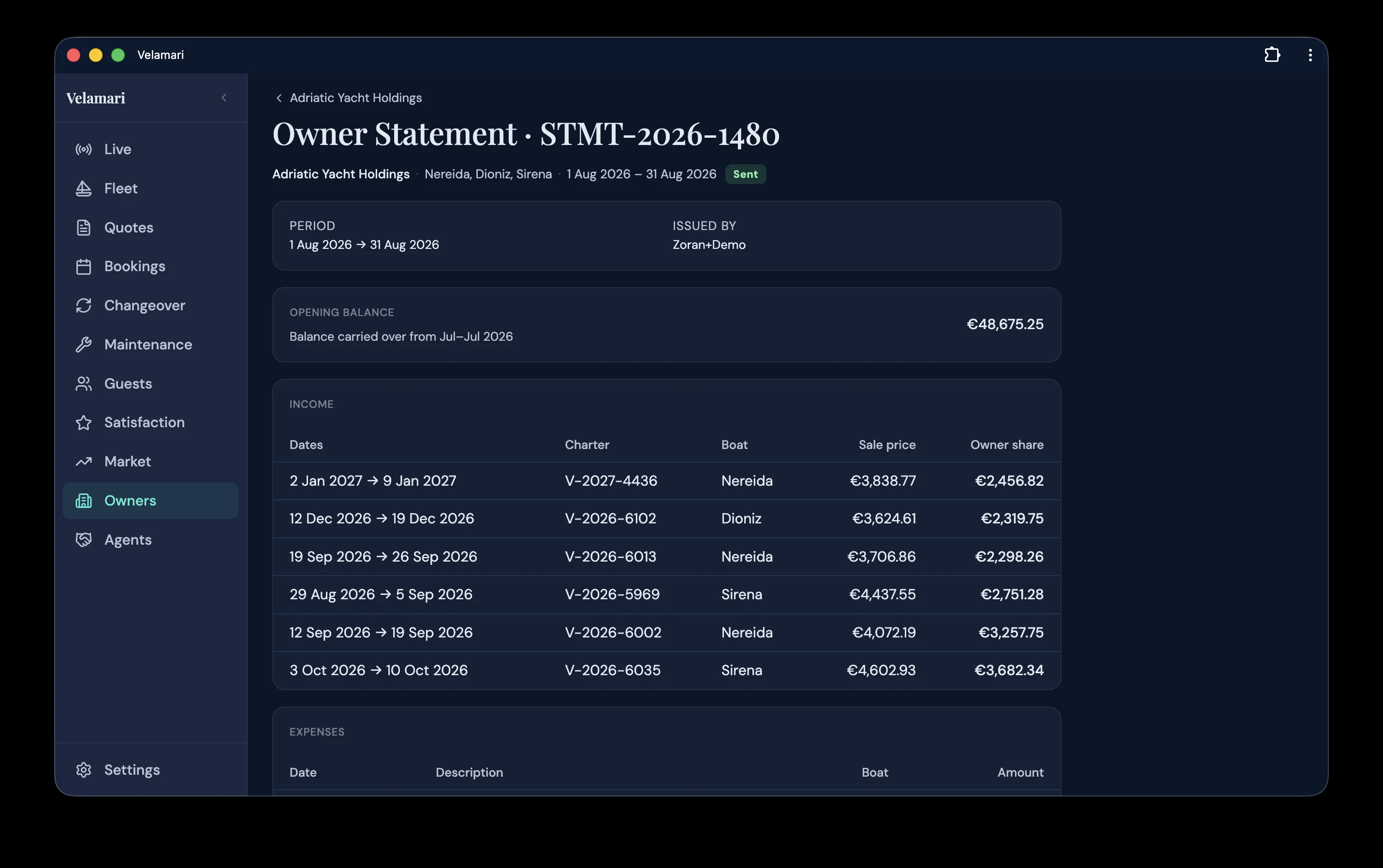
Every owner gets a statement per period, per boat: what it earned, what it cost, what was done to it. Branded, as a PDF, from the records your team was already filling in.

Replaces A spreadsheet rebuilt every month, and an owner with no way to check it.

Owners: One period, one boat: earned, spent, done.

What it cost

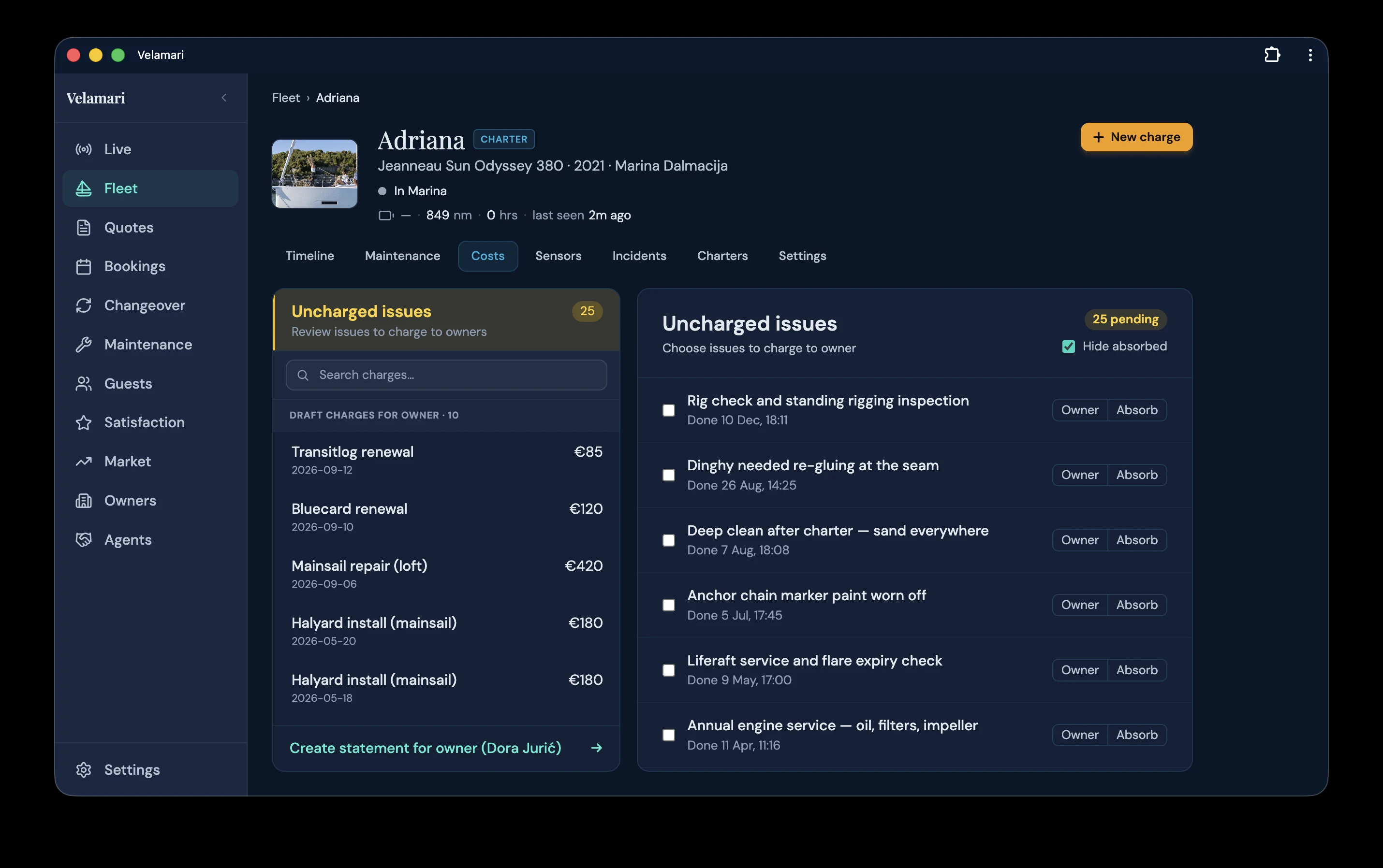
Every cost against the boat that caused it

When a yard or a chandler is involved in a job, the cost goes on the job. Invoices your accountant has already issued are recorded here too, with their PDFs. Velamari does not issue or file anything, it keeps the record where operations can see it.

Replaces Asking the bookkeeper what a boat cost, because operations could not see it.

What it cost: Every cost against the boat that caused it

What the boat adds

Two things stop being somebody’s word for it

The owner’s statement counts hours, not recollections

Engine hours come off the boat itself and onto the statement. When an owner asks how much their boat was used this period, the answer is a measurement rather than an estimate from the calendar. It is the same number whoever prepares it.

A grounding and the job it caused sit on the same page

The boat’s timeline carries inspections, faults and detected incidents together, in order. So the grounding at 14:32 on Thursday and the hull job raised on Saturday are read as one story, with the depth, speed and heel behind the incident still attached, whether the conversation is with a guest, an owner or an insurer.

Bring an owner statement you had to build by hand

We will show you the same period out of Velamari. That comparison tends to settle it faster than a demo does.

Talk to us
Request Demo